Author
Umang Sharma
Music Distribution Specialist
Date & Time
Jul 15, 2026
12 min read
If you are searching for the best white label music distribution platform, you are usually past the stage of wondering whether to start a distribution business and into the harder question of which platform to build it on. That is a bigger decision than it looks, because the platform you choose becomes the foundation of everything your customers will ever experience.
The trouble is that almost every provider claims to be the best, and the marketing tends to blur together into the same set of promises. So rather than hand you a ranked list that goes stale the moment someone changes their pricing, this walks through the criteria that actually separate a strong white label platform from a weak one, so you can judge any provider for yourself and pick with confidence.
I have spent years on this side of distribution, and the platforms that win are rarely the ones with the flashiest homepage. They are the ones that get the unglamorous things right: reliable delivery, accurate royalties, real branding control, and support that answers when a customer is panicking the night before a release. Here is what to actually look for.
The fastest way to compare is to try one
Comparing platforms is useful, but the fastest way to evaluate a solution is to test one yourself. ASUP Records offers a 14-day free trial so you can explore branding, distribution workflows, and platform features before committing.
What best actually means here
Best is not a single thing, because the right platform depends on the business you are trying to run. A solo manager onboarding a handful of artists needs something different from a label bringing a hundred-strong roster in-house, and both differ from an entrepreneur who wants distribution to be the whole company. Before you compare providers, get clear on your own shape: how many artists and labels you expect, how much branding control you need, and whether distribution is a side service or the main event.
It also helps to be clear on the model itself. A white label platform lets you run your own branded distribution business, or music aggregator, on infrastructure a provider builds and maintains. So when you evaluate the best platform, you are really deciding whose infrastructure you are willing to put your name and reputation on top of. That framing keeps you focused on the things that matter once you have real customers, rather than the things that look good in a sales deck.
The best white label platform is not the one with the best marketing. It is the one that gets delivery, royalties, and support right when it counts.
The criteria that actually separate them
Strip away the noise and a good white label platform comes down to a fairly short list of things done well. Weigh each of these seriously, because the weaknesses you overlook now become the complaints you cannot answer later.
Store coverage: delivery to every platform your customers care about, not just Spotify and Apple.
Branding and domain control: your logo, colours, and your own domain, so it truly reads as your company.
Royalty accounting and automatic splits: statements customers can trust, with collaborator splits handled without manual work.
Label and artist management: labels that can onboard and manage their own artists while you oversee everything.
Pricing that leaves a margin: a cost structure you can build a profitable business on top of.
Support and fraud protection: a real team behind you, and safeguards against artificial streaming that could threaten your store accounts.
Scalability: infrastructure that holds up from your first artist to a full roster without breaking.
Onboarding: a smooth first-release experience, because that is where you win or lose every new customer.
Store coverage and delivery reliability
Providers love to advertise the number of stores they deliver to, but the headline figure matters less than two things underneath it: reliability and relevance. A platform that claims two hundred stores but delivers late or gets releases rejected is worse than one that delivers to a hundred flawlessly.
Relevance means the right stores for your market, not just the global giants. If your customers serve audiences on JioSaavn, Anghami, or Boomplay, coverage of those platforms matters far more than an extra obscure logo on the wall. Ask how fast takedowns and metadata changes propagate too, because those small operational details are what your customers will judge you on when something goes wrong.
Branding and domain control
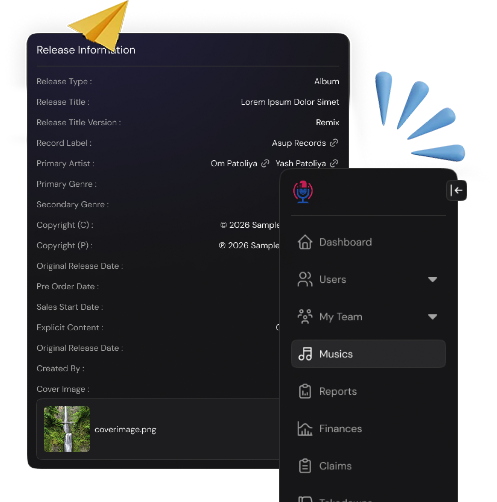
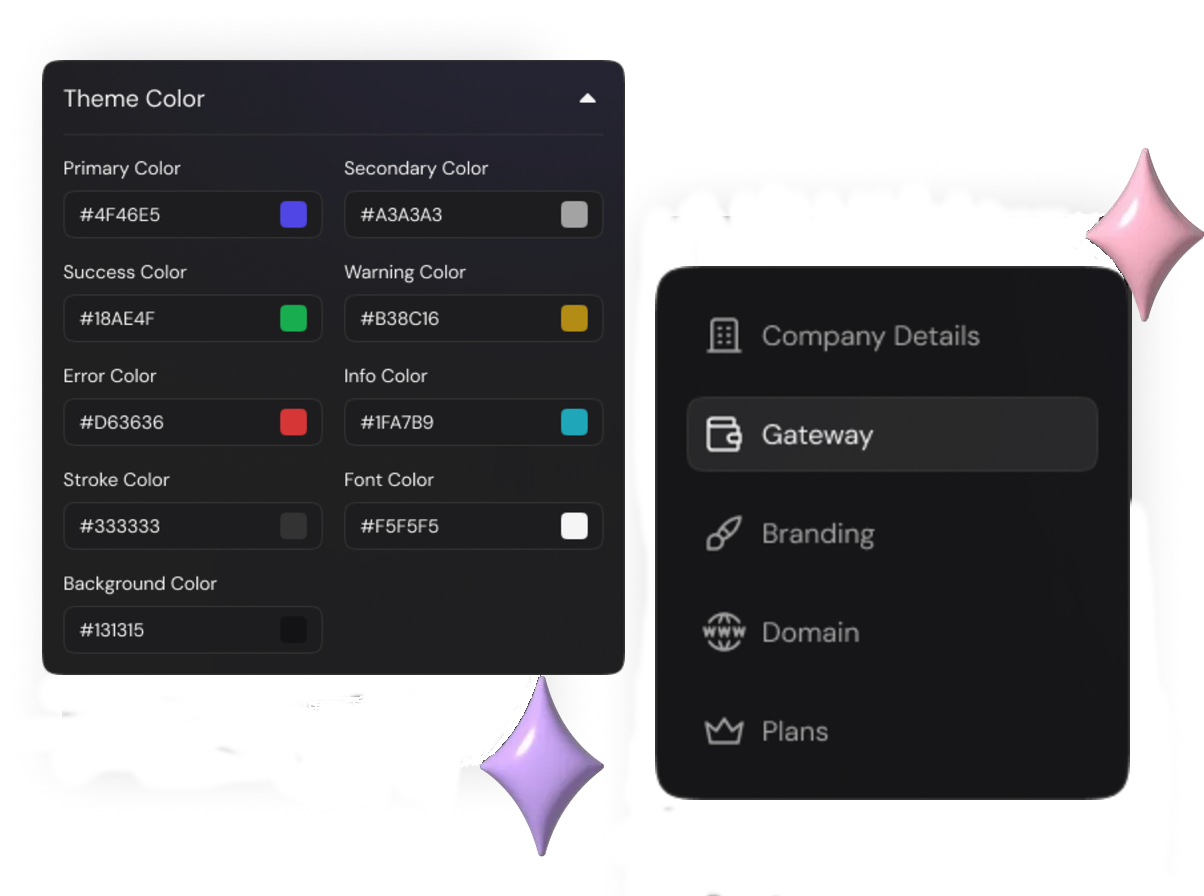
The entire point of white label is that your customers see you, not the provider. This is where cheaper offers quietly fall short. A weak platform gives you a logo swap and a subdomain; a strong one gives you full theming, your own domain, and branded emails, so nothing about the experience hints at who built it.
The test is simple: if a customer can tell who really runs the platform, it is not truly white label. Before you commit, confirm exactly how far the branding goes, because a service that looks half yours undermines the credibility you are trying to build.
Royalty accounting and automatic splits
The fastest way to lose a customer is a royalty statement that looks wrong. Because you sit between the stores and your artists, the accuracy and clarity of your reporting is effectively your product, and it is judged every single month.
Look for transparent reporting your customers can understand, automatic handling of collaborator splits, and clean, predictable payouts. Manual split spreadsheets do not scale and eventually cause a dispute. The tooling that handles this well is worth inspecting closely, and you can see how a mature platform structures reporting, splits, and payouts on the features page.
Label and artist management at scale
The platforms worth building on support labels that manage their own artists, not just flat individual accounts. This matters more than it first appears, because labels are usually your highest-value customers, and serving them well means giving them their own managed space while you oversee the whole ecosystem from an admin view.
If a platform can only handle individual artist accounts, you will hit a ceiling the moment a label wants to come aboard. Make sure the hierarchy of label, artist, and collaborator is built in rather than bolted on.
Pricing and the margin you can build on
The best platform on paper is a poor choice if its pricing leaves you no room to profit. Your business is the gap between what you charge your customers and what the platform costs you, so the cost structure has to be judged against what your market will realistically pay.
This is where cheapest is rarely best. A slightly higher platform cost that comes with better branding, cleaner reporting, and real support often pays for itself in the customers it keeps. Model the numbers honestly before you decide: the pricing page shows how the cost side works, and how much it costs to start a music distribution company breaks the full budget down so you can see where your margin actually comes from.
Run the numbers on a real platform
The margin you can build depends on the plan you build it on, so it is worth seeing the actual pricing rather than guessing. You keep your own branding and go live quickly, with no infrastructure to maintain underneath you.
Support, compliance, and fraud protection
When something breaks, it is your name on the platform, which means the provider support is effectively your support. Test how responsive and knowledgeable it is before you depend on it, because a slow provider turns every customer problem into your problem.
Weigh fraud protection just as seriously. Artificial streaming by even one of your customers can put your store accounts and reputation at risk, so you want a provider that actively polices it and gives you the tools and policy to do the same. This is the kind of safeguard nobody thinks about until the day it matters enormously.
A checklist for evaluating any provider
Run any platform you are considering, including the well-known names, through the same questions. If the honest answer to most is yes, it is a serious contender.
Does it deliver reliably to the specific stores my customers need?
Can I use my own logo, colours, domain, and branded emails?
Are royalty reporting and collaborator splits transparent and automatic?
Can labels manage their own artists under my brand?
Does the pricing leave me a real, sustainable margin?
Is there responsive support and genuine fraud protection behind me?
Will it scale from my first customer to hundreds without breaking?
Is onboarding smooth enough that a new customer succeeds on their first release?
Common mistakes when choosing a platform
Most of the regrets I hear trace back to the same handful of errors, and every one of them is avoidable once you know to look for it.
The pattern underneath them is always the same: people optimise for the number that is easy to compare, usually price or the store count, and quietly ignore the things that actually decide whether customers stay. Weighting your decision toward branding, reporting, and support feels less concrete than a headline figure, but it is exactly what separates a platform you grow on from one you outgrow or abandon within a year.
Choosing on the store count alone, then discovering that delivery is slow or rejections are common.
Picking the cheapest option and finding the branding is a thin skin your customers see straight through.
Overlooking royalty reporting until the first statement looks wrong and a customer loses trust in you.
Assuming a platform built for individual artists will handle labels, then hitting a wall when a label wants in.
Signing up without ever testing support, then learning how slow it is on the day a release breaks.
Underpricing your own service because you never modelled the platform cost against the margin you need.
Where ASUP Records fits
I am not going to pretend to be neutral, but I will be useful: judge ASUP Records against the same checklist rather than my word for it. It is built around exactly these criteria, with full branding and domain control, delivery to 150+ stores, automatic royalty accounting and splits, proper label and artist management, and support and fraud protection behind you.
The best way to assess it is to look at the actual capabilities on the features page and the model on the white label platform, then hold them up against the questions above. A platform that answers them well is worth building on, whoever makes it.
Choosing the right platform for you
The best white label music distribution platform is the one that fits the business you are actually building, judged on delivery, branding, royalties, management, margin, and support rather than on marketing. Get clear on your own shape first, then run every provider through the checklist and let the answers, not the sales pages, decide.
When you are ready to move, see the white label platform and read how much it costs to start a music distribution company so you go in with real numbers instead of guesses. The platform is the foundation of everything your customers experience, so it is worth the time to choose it well. If you are still deciding how to structure the business itself, white label versus reseller distribution weighs the two models.
Frequently asked questions
What makes the best white label music distribution platform?
The best platform reliably delivers to the stores your customers need, gives you full branding and domain control, provides transparent royalty accounting with automatic splits, supports label and artist management, leaves you a real margin, and stands behind you with support and fraud protection. Marketing claims matter far less than getting these fundamentals right.
How do I choose a white label distribution platform?
Start by defining your own business: how many artists and labels you expect, how much branding you need, and whether distribution is a side service or the whole company. Then run each provider through a fixed checklist covering store coverage, branding, royalties, management, pricing margin, support, scalability, and onboarding, and let the answers decide.
Is the cheapest white label platform the best value?
Rarely. Your business depends on branding, reporting, and support, and a slightly higher platform cost that gets those right usually pays for itself in the customers it keeps. Cheapest often means a thin brand skin, weaker reporting, or slow support, which cost you more in churn than you saved on the fee.
What features should a white label distribution platform have?
At minimum: broad and reliable store delivery, full branding and custom domain support, transparent royalty accounting with automatic splits, label and artist management, scalable infrastructure, responsive support, fraud protection, and smooth onboarding. Anything missing from that list will eventually become a problem you cannot solve for your customers.
Can I use my own branding and domain on a white label platform?
On a strong platform, yes, including your logo, colours, custom domain, and branded emails, so the entire experience reads as your company. Weaker offers only allow a logo swap and a subdomain, which is not truly white label. Confirm exactly how far the branding goes before you commit.
How do royalties work on a white label platform?
The provider collects earnings reports from the stores and passes them through your platform, where they are reconciled down to the individual track and split among collaborators. You report those earnings to your customers under your brand and manage payouts. The accuracy and clarity of this reporting is one of the most important things to evaluate.
How much does a white label music distribution platform cost?
Most charge a recurring subscription that scales with the size of business you run, rather than a large upfront build cost. What matters is whether the pricing leaves you a healthy margin over what you charge your own customers. The pricing page shows the cost side, and a dedicated cost breakdown walks through the full budget.
How quickly can I launch on a white label platform?
Because the technology already exists, launching is usually a matter of days rather than the many months it would take to build distribution infrastructure yourself. Most of your setup time goes into branding, pricing, and onboarding your first customers rather than into engineering.
Judge ASUP Records against your own checklist
The only real test is running a platform against the criteria that matter to your business. Launch a fully branded platform on white-label infrastructure with a 14-day free trial, then hold its delivery, branding, and reporting up to the questions above.